Why long-term design thinking often outperforms quick cosmetic upgrades

For many UK homeowners, the question of how to add value to your home has started to feel a lot more important. Higher mortgage rates, rising build costs and a more cautious buyer market have all changed how people think about moving. Upsizing isn’t always the obvious – or affordable – next step it once was.
Instead, more homeowners are choosing to make the most of the space they already have. Renovating, extending or rethinking existing layouts can feel like a smarter option, especially when it improves day-to-day living as well as long-term resale value. But it’s also where a familiar problem crops up: many upgrades focus on how a home looks, rather than how it actually works.
Fresh paint, new flooring and updated fixtures can certainly make a place feel more modern. The trouble is, buyers are very good at spotting cosmetic updates – and just as quick to look past them. What tends to make a bigger impact are changes that improve space, light and flow.
There’s evidence to back this up too. UK-based research has shown that layout-led improvements can add significantly more value than surface-level upgrades. For example, removing an internal wall to create open-plan living has been shown to add tens of thousands of pounds to a home’s value in some areas, simply by improving how the space feels and functions.

It’s a useful reminder that perceived space and quality often matter more than finishes alone. And this is where bigger design decisions start to pay off. Choices that affect how you move through a home, how rooms connect and how light travels can have a much greater impact on how a property is experienced – and valued.
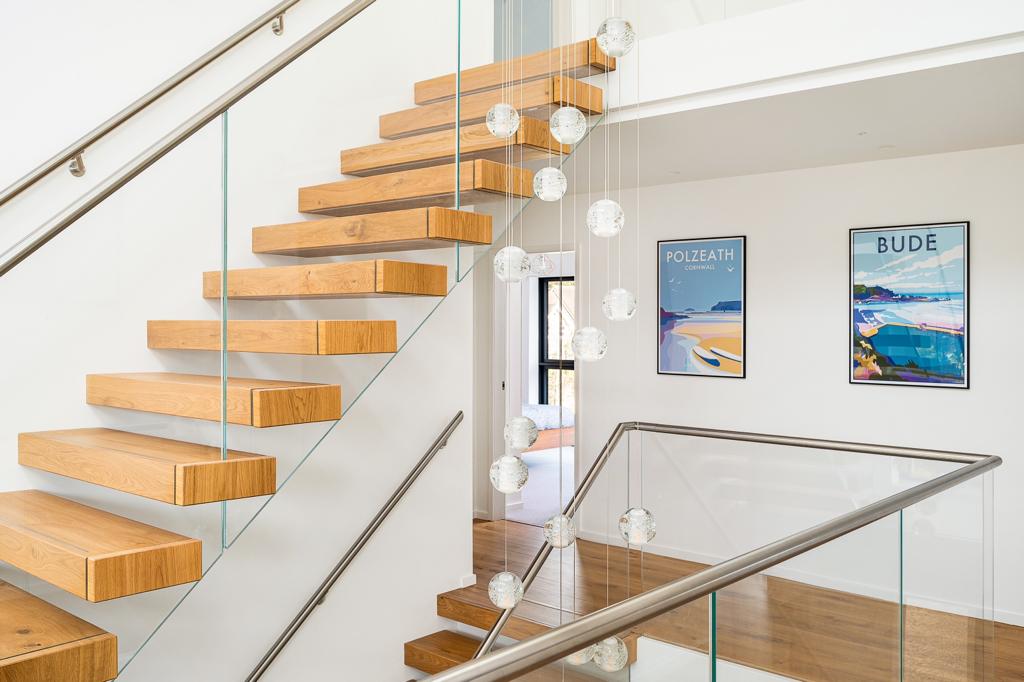
A floating staircase is one example of this kind of thinking. When it’s planned as part of the overall layout, rather than added later on, it can improve everyday living, elevate buyer perception and contribute to long-term value.
For anyone exploring how to add value to your home without relying on quick fixes, it’s an option worth looking at more closely.
Why adding value to your home isn’t just about adding space
When thinking about how to add value to your home, adding more space often feels like the safest bet. An extra bedroom, a bigger kitchen or a rear extension all sound like clear, measurable ways to increase value.
The reality is more nuanced. Extensions are costly and disruptive, and they don’t always improve how a home actually feels. Many homeowners have seen properties where square footage has increased, but natural light has been compromised, layouts feel awkward, or circulation spaces have been squeezed to make everything fit.
Common examples include long rear extensions that push living spaces further away from daylight, or additional rooms that force staircases, hallways or landings into tight, enclosed corners. On paper, the home is bigger. In practice, it can feel darker, more segmented and harder to move through.
Buyers tend to notice this straight away. They’re not mentally totalling square metres – they’re reacting to how the space feels as they walk around. Does the home feel open or boxed in? Bright or overshadowed? Easy to move through or slightly awkward? These impressions form quickly and often outweigh the appeal of an extra room.
This is why design-led decisions can outperform simply adding space. Improving flow, opening up sightlines or allowing light to travel more freely can transform how existing space is experienced. In many cases, that shift makes a home feel more valuable than one that’s technically larger but poorly arranged.
Ultimately, value isn’t just about what you add – it’s about how well the space works once you do. And that’s where thoughtful design choices start to make the biggest difference.
Why a floating staircase adds value to your home
When people start thinking about how to add value to your home, the staircase rarely tops the list. Kitchens, bathrooms and extensions usually steal the
spotlight. But in reality, few features influence first impressions, layout and day-to-day experience quite as much as the staircase.
Because it’s used constantly and often sits at the heart of a home, the staircase subtly dictates how the space feels. When it’s designed well, it can add value in ways that go far beyond appearance.
It creates a statement feature buyers remember
Every buyer uses the staircase during a viewing, and almost everyone notices it, even if they don’t comment on it directly. A floating staircase naturally draws attention, but without overwhelming the room.
Its appeal lies in its restraint. The lighter structure makes it feel considered rather than decorative, which is why it tends to stick in people’s minds long after other details blur together. In a market where buyers might view several similar properties in a day, being memorable matters. Homes that stand out for the right reasons are often the ones that attract stronger interest – and stronger offers.