
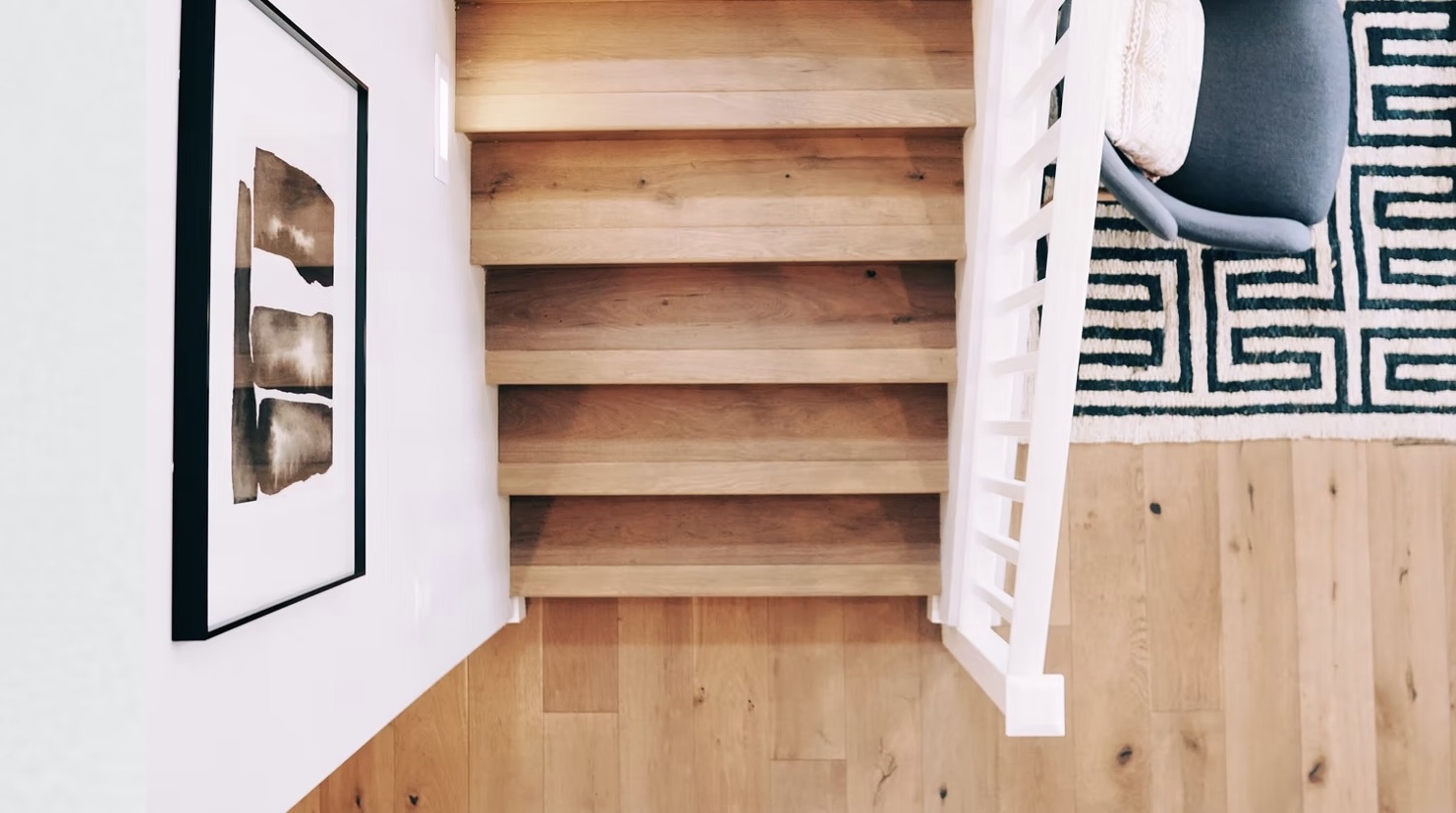
Match made in heaven, or design clash waiting to happen?
When it comes to choosing wood flooring and stair finishes, most homeowners hit the same crossroads: do you match them, or go for contrast? One route gives you a clean, cohesive flow. The other adds depth, texture and a bit of character. Both can work – but both can also go wrong.
The truth is, it’s not just about how it looks. Your decision affects how your space feels, functions and even ages over time. Especially if you’re using engineered wood flooring on stairs, where finish, tread style and lighting all come into play.
This guide breaks it all down – from visual harmony to practical pros and cons – so you can make a confident choice. We’ll cover real-life examples, expert advice and what to avoid if you want your design to last.
Why it matters
Matching your wood floors and stairs isn’t just a question of taste; it’s a decision that can shape how your entire space feels.
In open-plan homes, mismatched tones between flooring and stairs can feel jarring. You might not notice it at first, but over time, the disconnect can make a space feel disjointed or unfinished. On the other hand, when your wood floors and stairs share the same finish, the transition between levels becomes seamless. The space flows. It feels intentional.
Even in smaller homes, cohesion can create the illusion of more space. It’s one of the easiest ways to give your interiors that high-end, professionally designed feel, without a total overhaul.
Then there’s resale value. Buyers notice the details, and consistency between your wood flooring for stairs and surrounding floors can subtly suggest quality and care.
Of course, matching isn’t your only option, but it’s one worth considering carefully.
Pros and cons of matching vs contrasting
There’s no universal rule when it comes to pairing your wood floors and stairs, but understanding the pros and cons of each approach can help you avoid costly design regrets. Whether you’re renovating a hallway or designing a staircase from scratch, the key is balance and intent.
Matching wood floors and stairs
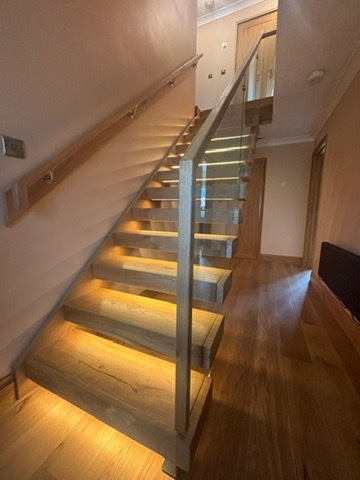
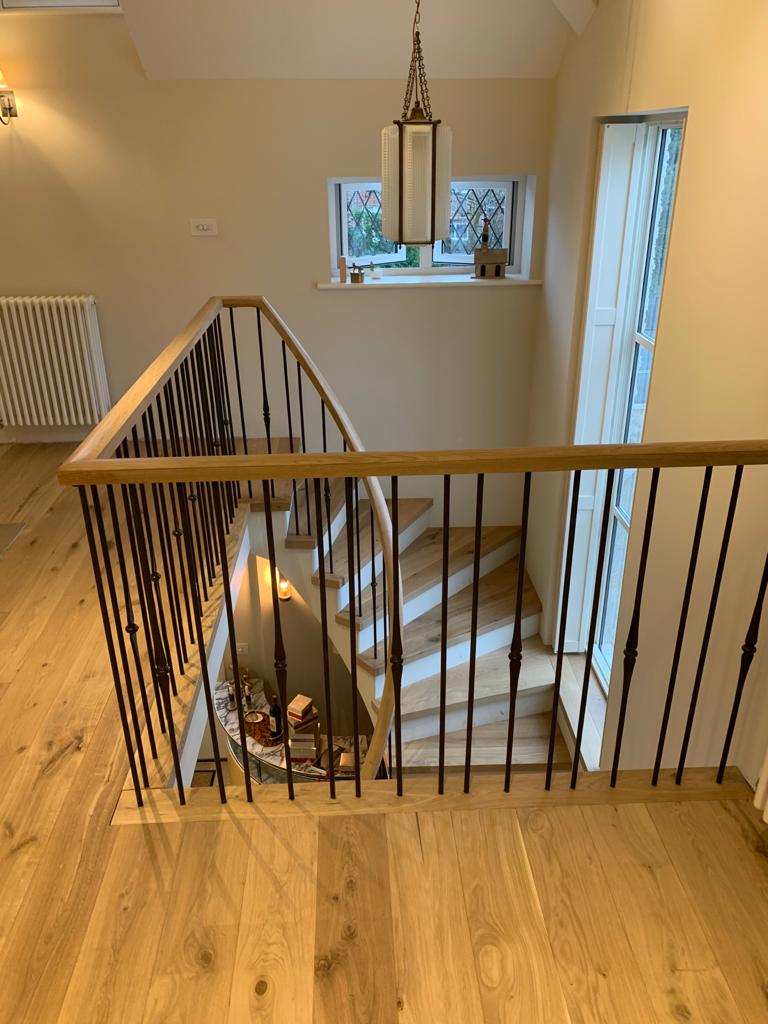
Going for the same tone, species, or finish across floors and stairs is a popular choice, especially in open-plan homes where every transition is on show.
- Creates a seamless, unified look that helps your space feel larger and more considered
- Makes it easier to achieve a clean, minimal aesthetic
- Simplifies the material selection process, particularly if you’re ordering flooring and stair treads at the same time
- Works well when using engineered wood flooring on stairs, which can be colour-matched to the surrounding floors
- Adds a sense of calm and cohesion to busy areas like entryways or living rooms
Contrasting floors and stairs
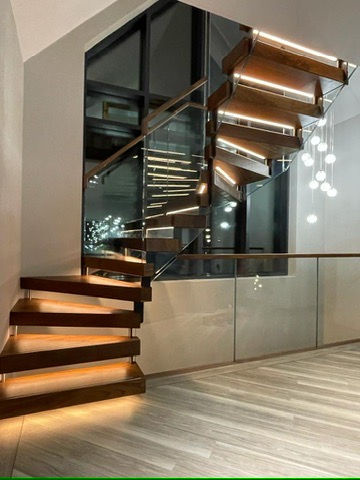
Want your staircase to make a statement, or simply working with existing floors? A contrasting finish might be the better route.
- Adds visual definition between levels, drawing the eye to architectural features
- Useful in traditional or eclectic interiors where too much sameness can feel flat
- Offers greater flexibility when your staircase and floors aren’t being updated at the same time
- Can help highlight high-quality stair materials, like oak treads against painted risers or glass balustrades
Still on the fence? Next, we’ll walk you through the key factors to help you decide.
What to consider when choosing
Before you commit to matching or contrasting your wood floors and stairs, it’s worth thinking through a few practical (and often overlooked) details. These can make or break the final result, even more so when you’re working with engineered wood flooring on stairs.
Traffic levels
High-traffic areas like hallways and staircases demand hardwearing finishes. If you’re matching floors and treads, make sure the material you choose is durable enough for both.
Lighting conditions
Natural light (or lack of it) plays a big role in how wood tones appear. In darker spaces, lighter finishes can help open things up. Matching flooring and stairs in the same pale oak, for instance, can make a dim hallway feel brighter and more modern.
Maintenance and cleaning
Glossy or smooth finishes show up dust, scratches and footprints more easily – on both floors and treads. If you want consistency, consider a matte or brushed finish that wears well across both surfaces.
Design balance
Are your stairs a focal point, or more of a backdrop? If your space is already filled with bold design choices, matching your floors and stairs can tone things down. If everything else is minimal, a contrasting staircase could bring just the right amount of texture and depth.
Existing features
If you’re only replacing one element – like updating your staircase but keeping your current floors – it might make sense to contrast rather than struggle for an exact match. But even then, try to find a tone that complements the overall palette of your home.
Examples to inspire your choice
Still not sure whether to match or contrast your wood floors and stairs? Here are a few examples from real homes to show how both approaches can work – with the right details.
Matched: Smoked Oak everything

Homeowners may opt for smoked oak throughout: floorboards, treads and risers all in the same brushed finish. The result would be a seamless, high-end look to make their open-plan hallway and living area feel more connected and polished. Subtle differences in grain keeps things from feeling too uniform.
Contrasted: Warm walnut treads, painted risers

Another homeowner could go bold with dark walnut treads paired with crisp white risers and lighter flooring. The contrast gives the staircase a grounded feel, adds visual weight and helps define the area as a standout architectural feature – all without clashing with the rest of the home’s palette.
Hybrid: Matched treads and flooring and contrasting handrails
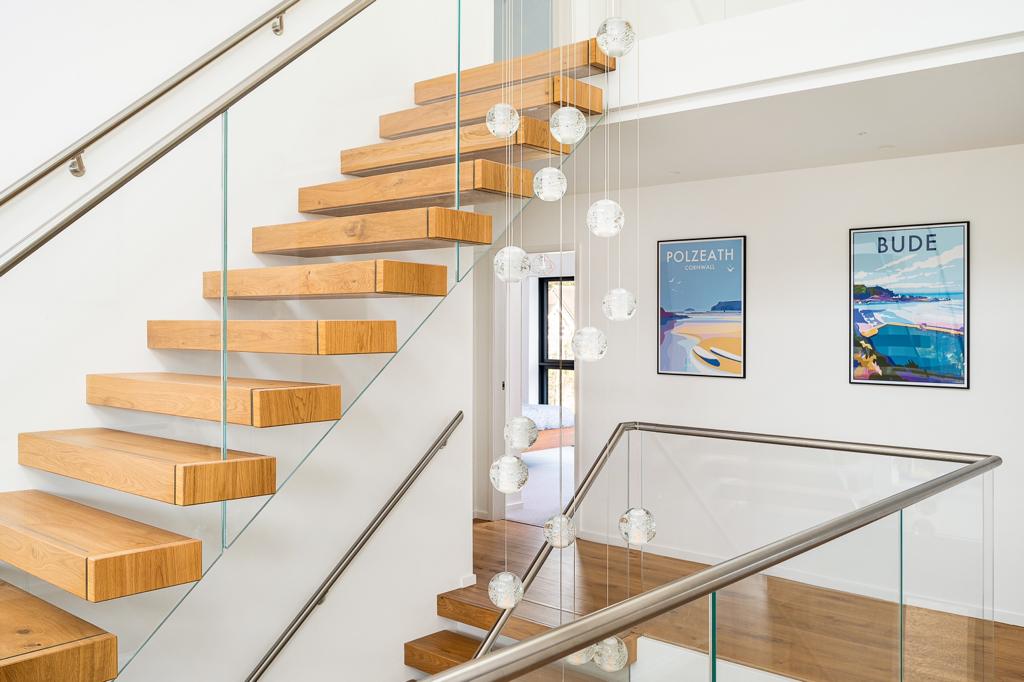
For clients wanting flexibility, a hybrid approach works well: they match their stair treads to the flooring and add stainless steel handrails. This introduces interest while keeping flow and cohesion.
There’s no single “right” choice, just the one that suits your space, style and the way you live.
FAQs about wood floors and stairs
Can you use engineered wood flooring on stairs?
Yes – engineered wood is a popular and practical option for staircases. It’s more stable than solid wood, which makes it less prone to warping, especially in temperature-fluctuating areas like stairwells. Just make sure the nosing and finishes are built for stair-specific wear.
Do wood floors and stairs need to match?
Not at all. Some homeowners prefer a cohesive look; others prefer contrast. That said, the key is to make sure tones and finishes work together, whether you match exactly or just complement. Mismatched woods with clashing undertones can cheapen the look of an otherwise beautiful home.
Can I match my stair treads to my existing flooring?
Yes. In fact, many manufacturers – including Stairkraft – offer hand-matched stair treads to coordinate with existing floors. If you’re starting from scratch, you can also choose a full package: flooring and staircase components in the same species, tone and finish for total cohesion.
What types of wood are best for stairs?
Hardwoods like oak, ash and walnut are commonly used for their durability and timeless appeal. Oak is especially popular due to its availability in a wide range of tones, from pale brushed whites to deep smoked finishes.
Is matching more expensive than contrasting?
Not necessarily. It depends on the materials and finishes chosen. Matching everything can simplify the decision process and reduce waste, while contrasting often requires more planning to avoid visual clashes.
Final thoughts
When it comes to pairing your wood floors and stairs, there’s no rulebook – just what makes sense for your space, your light and how you live. Matching creates flow and simplicity. Contrasting adds depth and visual interest. Both can work beautifully if done with intention.
If you’re still undecided, don’t stress. At Stairkraft, we offer engineered wood flooring and stair treads that can be expertly matched or styled to contrast – whatever suits your layout best. No matter if you’re renovating one level or building from the ground up, we’ll help you find a finish that feels right.
Want to see what’s possible? Browse our materials, request a brochure or get in touch for a no-pressure chat about your options.